Han Dynasty Hanfu
Showing all 28 results


 Price range: $174.00 through $888.00

- Price range: $202.00 through $251.00
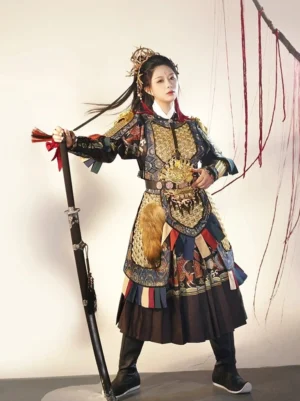
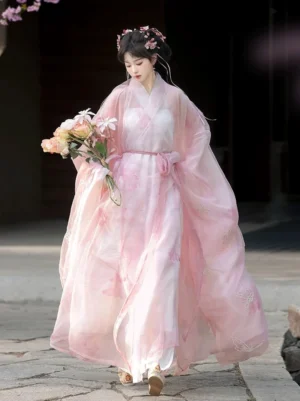
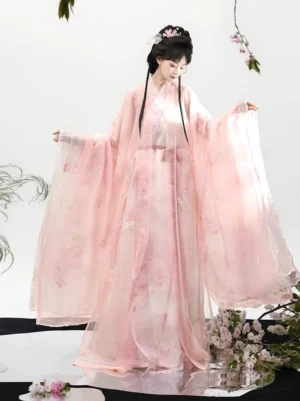
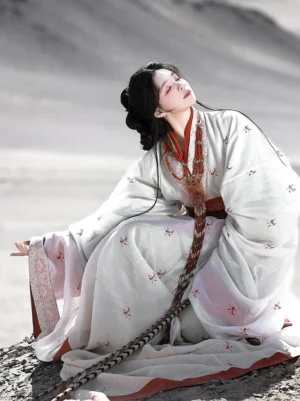
Showing all 28 results
Authentic Han Dynasty Hanfu: The Elegance of Antiquity
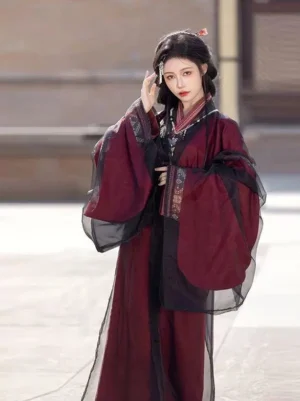
The Han Dynasty (206 BCE – 220 CE) represents a golden age of Chinese civilization, establishing cultural and sartorial traditions that would echo for millennia. Han Dynasty Hanfu is celebrated for its dignified, solemn, and flowing aesthetic. Characterized by layered robes, wide sleeves, and the iconic cross-collar, this style emphasizes modesty and fluid movement. Whether you are seeking a historically accurate Warring States ensemble, a dramatic straight-hem robe, or a regal Han-style wedding outfit, our collection brings the majesty of antiquity to life.
The Straight-Hem Robe (Zhiju)
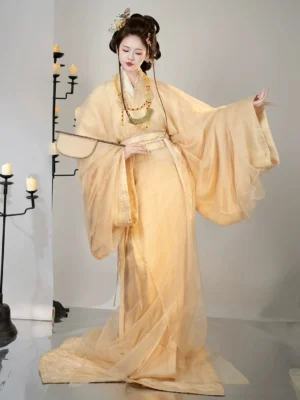
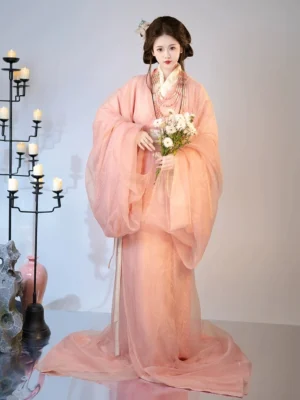
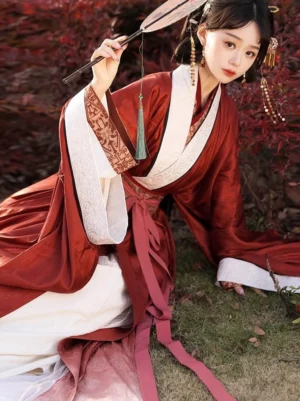
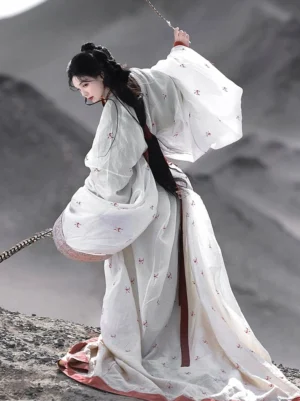
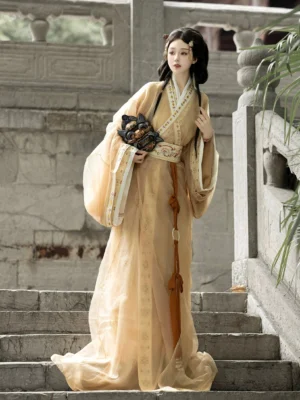
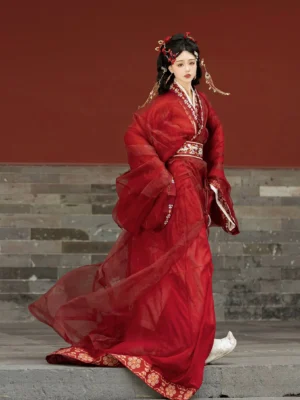
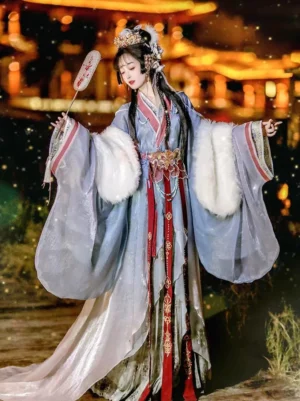
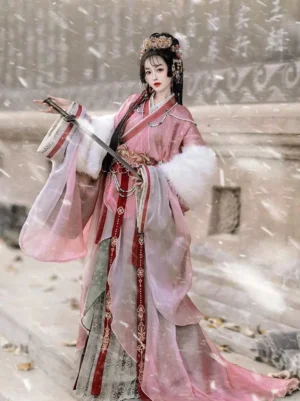
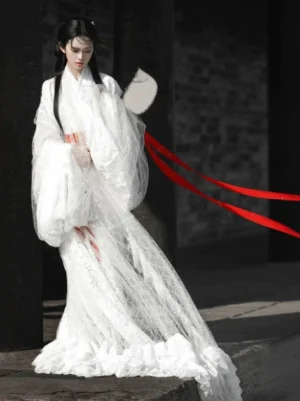
The cornerstone of Han Dynasty fashion is the Zhiju (直裾), or straight-hem robe. Unlike the curved-hem Quju which spirals tightly around the body, the straight-hem robe falls cleanly to the floor in vertical lines. This creates a visually lengthening, graceful silhouette that became standard for both men and women during the later Han period.
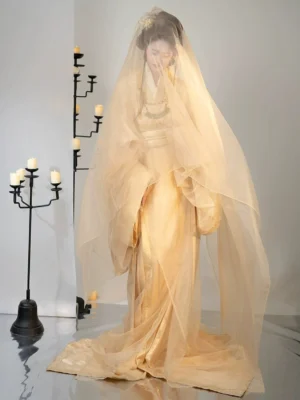
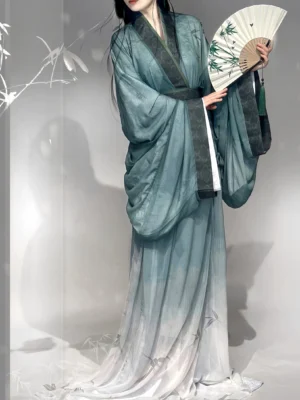
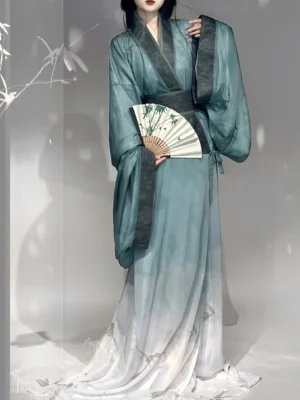
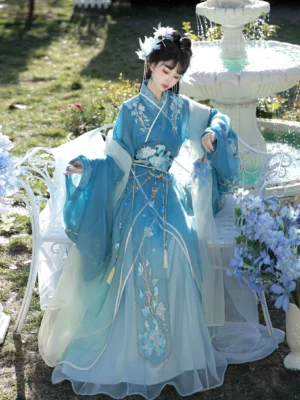
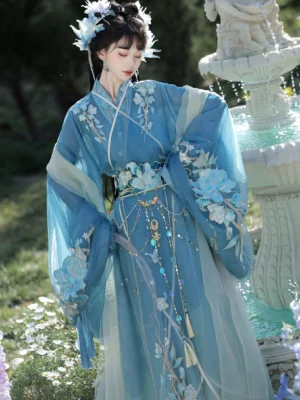
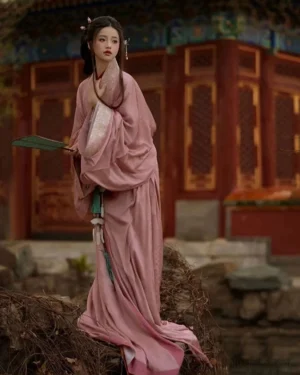
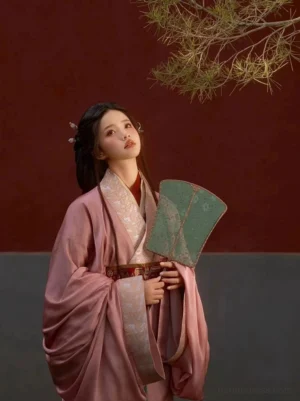
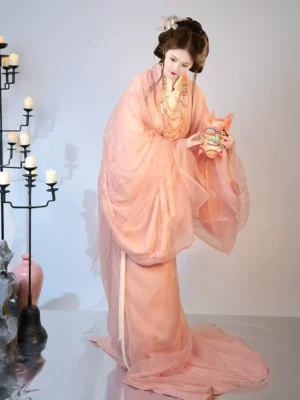
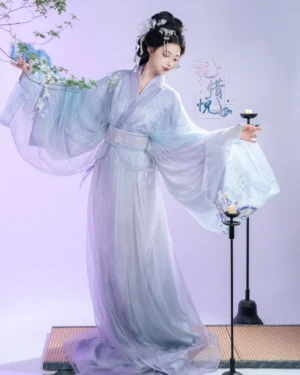
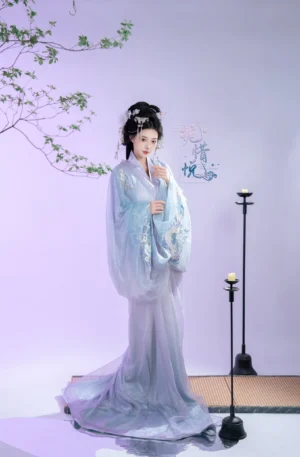
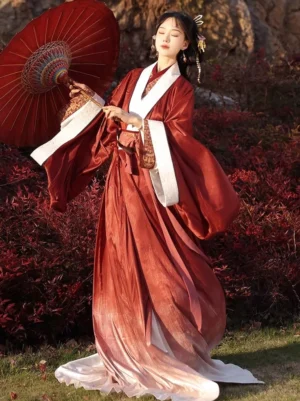
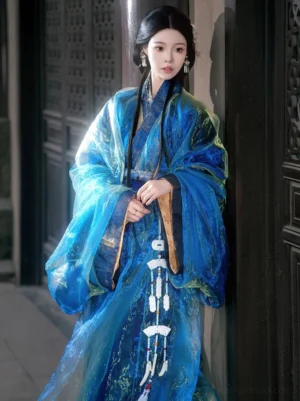
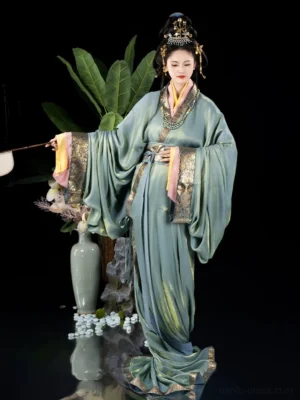
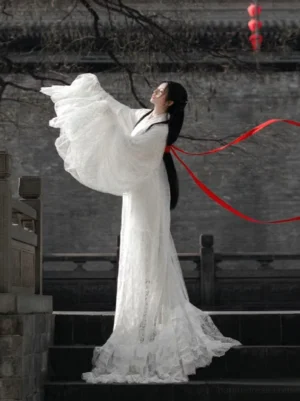
Our collection features traditional interpretations like the Apricot Han Dynasty Straight-Hem Robe alongside modern, ethereal designs such as the Blue Gradient and Falling Petals Pink sets, blending historical cuts with contemporary sheer fabrics.
Key structural elements of the Straight-Hem Robe include:
Cross-collar (Jiaoling Youren): The iconic overlapping collar wrapping the right side over the left.
Wide flowing sleeves (Daxiu): Creating a graceful, dramatic drape.
Straight hemline (Zhiju): Falling cleanly to the floor without spiraling.
Waist sash: Used to secure the garment elegantly without the use of buttons.
Historical Context: The shift toward straight-hem robes was driven by practical evolution. As tailored trousers became standard undergarments, the tight, wrapping Quju was no longer necessary for modesty, allowing for the relaxed, flowing Zhiju to dominate court and casual wear.
Warring States Influences
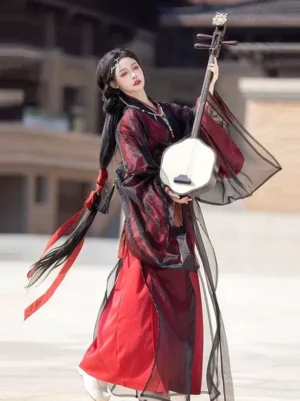
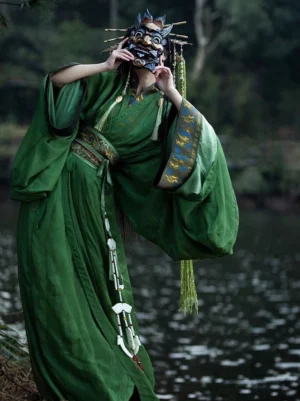
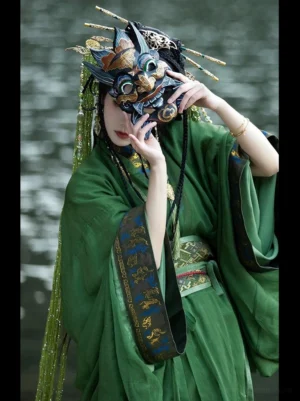
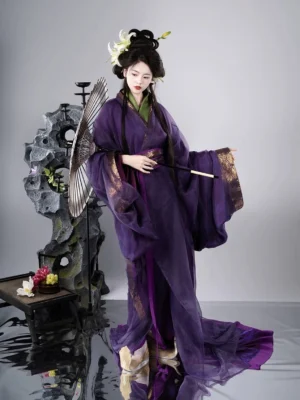
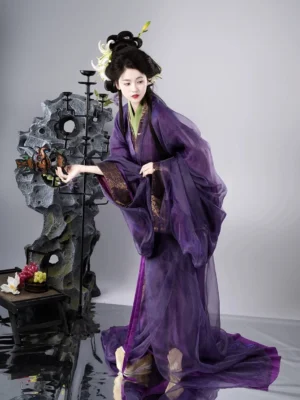
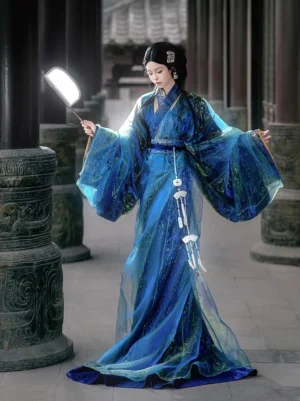
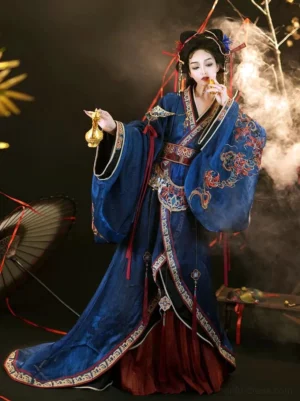
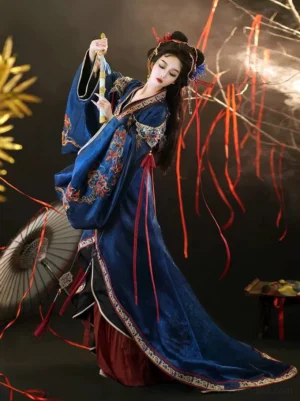
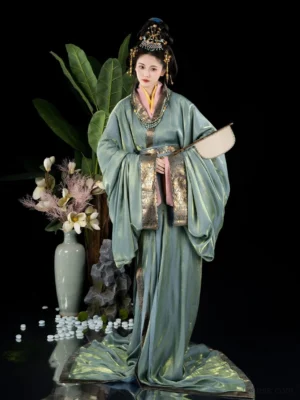
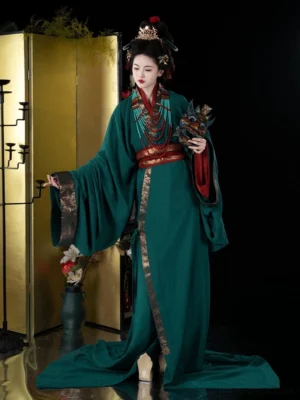
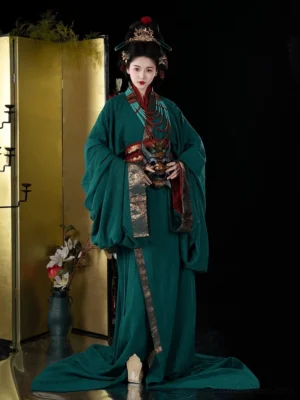
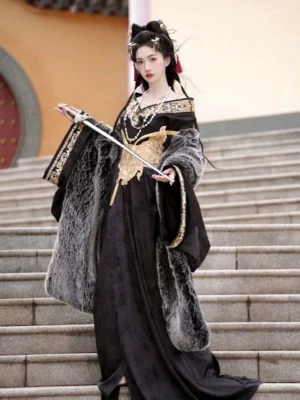
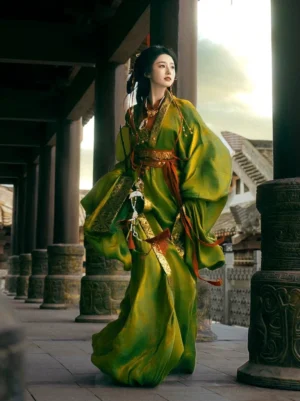
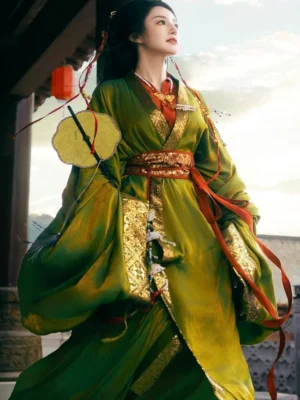
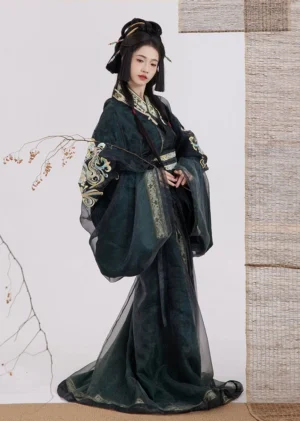
Many garments in this collection, such as the Emerald Green and Shimmering Blue Warring States Straight Hem Robes, draw inspiration from the period immediately preceding a unified China. Warring States Hanfu typically features wider, more exaggerated sleeves, contrasting borders (often in bold reds, blacks, and golds), and heavily layered inner and outer robes that create a rich, textured look.
Han Dynasty Wedding Hanfu
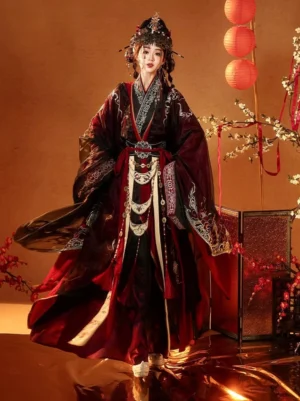
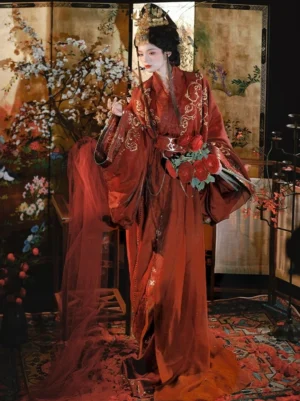
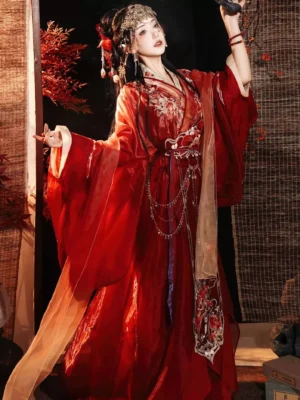
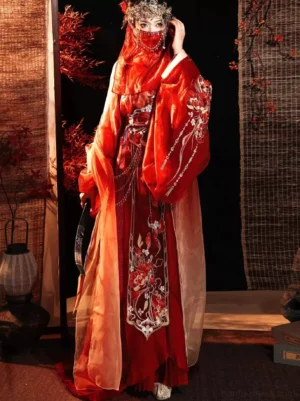
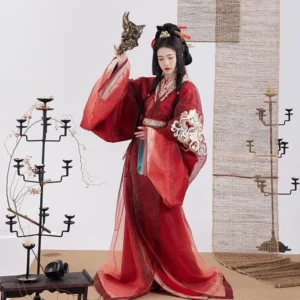
Unlike the bright, saturated reds favored in later periods like the Ming and Qing dynasties, early Chinese wedding attire followed the Xuanxun (玄纁) color system. Xuan represents the dark color of heaven (black with a hint of red), and Xun represents the color of earth (red).
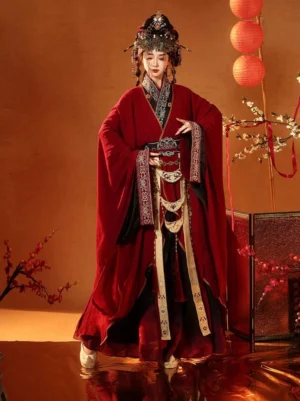
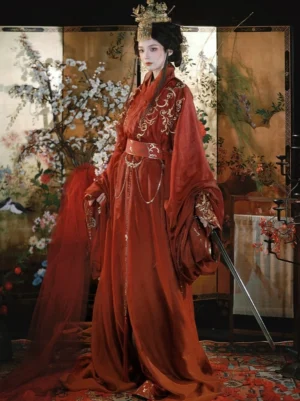
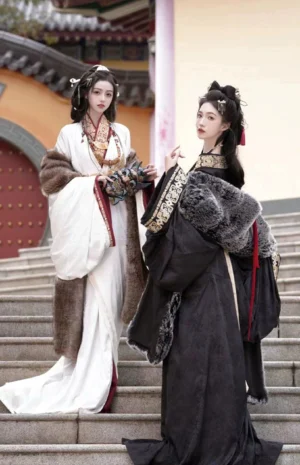
Our Fire Lotus Warring States Han Dynasty Wedding Set and the Gilded Phoenix Han Dynasty Wedding Set honor these ancient traditions. They utilize deep cinnabar reds, rich blacks, and heavy gold cloud embroidery to create a solemn, majestic aesthetic suitable for a highly traditional ceremony.
Key Features of Han Dynasty Style
To achieve an authentic Han aesthetic, look for these signature design elements:
Jiaoling Youren (交领右衽): The distinct cross-collar overlapping the right side over the left, a fundamental rule of traditional Hanfu.
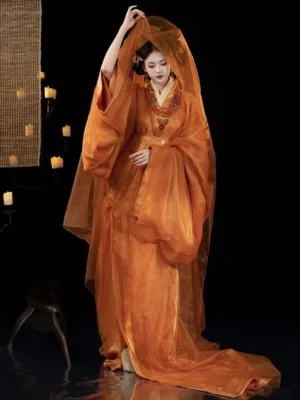
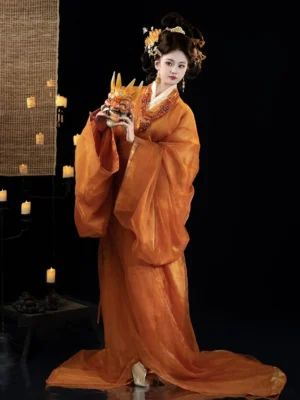
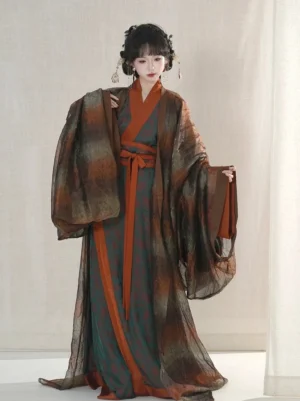
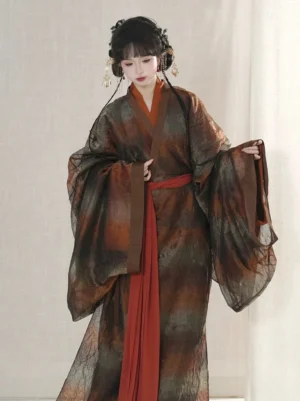
Contrasting Trims: Wide, distinct borders along the collar, cuffs, and hem, often featuring woven brocade or intricate embroidery (as seen in our Snake Spirit and Burnt Orange sets).
Earthy & Gradient Palettes: While historically focused on natural dyes (deep greens, burnt oranges, indigo, and black), our modern collection expands this to include beautiful gradient dyes and pastel interpretations.
Waist Belts and Sashes: Han Dynasty robes are secured without buttons. A wide cloth belt and tying sashes cinch the waist, providing a canvas for hanging jade pendants, decorative knots, and silk fans.
How to Style Your Outfit
The beauty of Han Dynasty Hanfu lies in its layered weight and elegant accessories. Pair your straight-hem robe with a traditional topknot or low braided hairstyle secured by simple wooden or jade hair sticks. Because the robes are naturally voluminous without buttons, carrying a traditional silk fan and attaching a jade waist tassel pendant to your belt will add historical authenticity and graceful movement to your ensemble.